

How Can Epistaxis (Nosebleeds) Be Prevented?
Epistaxis, or nosebleeds, can often be prevented with simple lifestyle changes and proper care. At Columbia Clinic Urgent Care, our team provides expert advice on how to reduce the risk of nosebleeds, such as using a humidifier, staying hydrated, and avoiding irritants. Additionally, we offer treatments and tips for managing underlying causes, like allergies or dry air, that may contribute to frequent nosebleeds. For more information, please contact us or request an appointment online. We have convenient locations to serve you at Tibbetts St Portland, Stark Street Portland, and Tigard, OR. We also accept walk-ins.
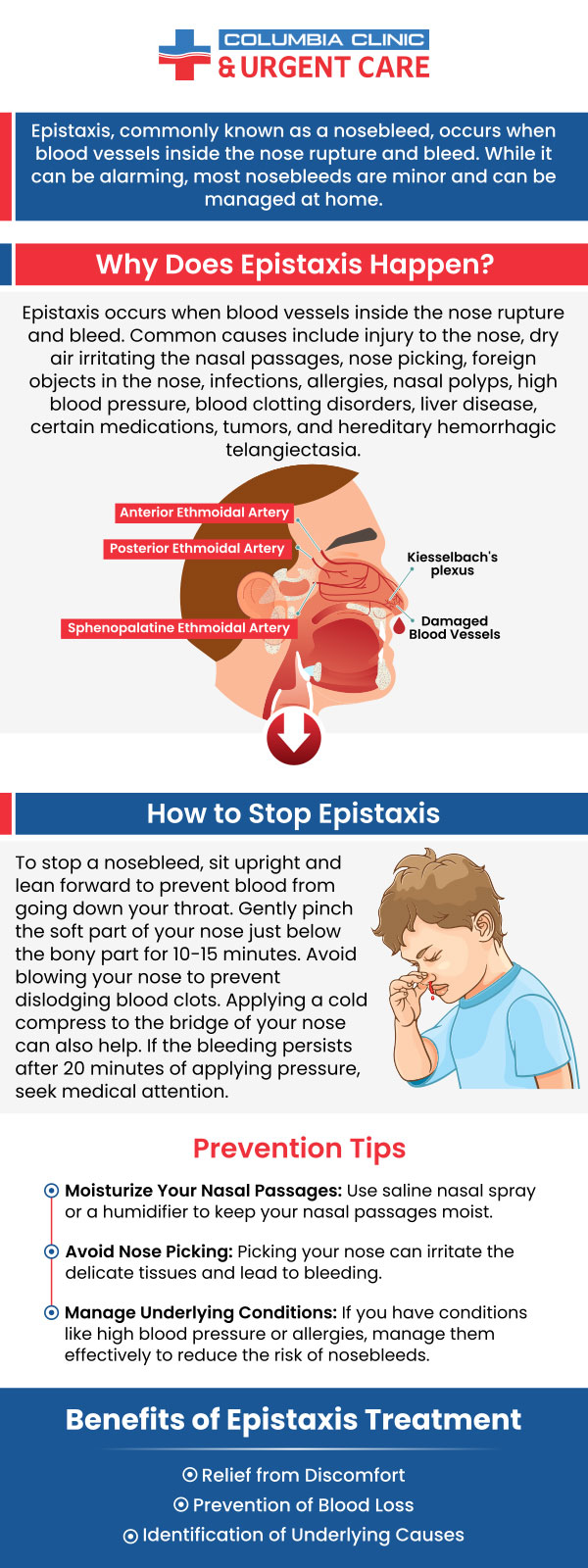
Table of Contents:
What lifestyle changes can help prevent epistaxis?
What role does temperature play in preventing epistaxis?
How important is hydration in preventing epistaxis?
What are the best methods to prevent epistaxis (nosebleeds) offered at Columbia Clinic Urgent Care?
At Columbia Clinic Urgent Care, our team often see patients who are concerned about frequent nosebleeds, also known as epistaxis. Fortunately, there are several steps you can take to help prevent nosebleeds and protect your nasal health.
● Keep Nasal Passages Moisturised
Dry air—especially during the winter months or in heated indoor environments—can leave your nasal passages vulnerable to bleeding. We recommend using a humidifier at home and applying saline nasal sprays or gels to maintain moisture inside your nose.
● Avoid Nasal Trauma
Be gentle with your nose to protect the delicate blood vessels inside. Avoid picking your nose or blowing your nose too forcefully. If you need to sneeze, try to do so with your mouth open to reduce pressure in your nasal passages.
● Manage Allergies and Sinus Issues
Allergies and sinus infections can irritate your nose and increase your risk of nosebleeds. At Columbia Clinic Urgent Care, our providers can help you find the right treatment plan to control these conditions and reduce inflammation in your nasal passages.
● Consider Your Medications
Certain medications, such as blood thinners or nonsteroidal anti-inflammatory drugs (NSAIDs), can make nosebleeds more likely. If you’re concerned about your medication increasing your risk of nosebleeds, consult with our medical team before making any changes.
● Lifestyle Changes for Prevention
Tobacco smoke can dry out and irritate the lining of your nose, so quitting smoking is beneficial for nasal and overall health. Additionally, if you participate in contact sports or activities with a risk of facial injury, be sure to wear proper protective gear.
By following these tips and reaching out to Columbia Clinic Urgent Care with any concerns about frequent or severe nosebleeds, you can take steps to maintain healthy nasal passages and reduce your risk of recurrent episodes.
At Columbia Clinic Urgent Care, we often see patients with nosebleeds (epistaxis), especially during the colder months or periods of low humidity. Temperature and environmental conditions play a significant role in both the occurrence and prevention of nosebleeds.
Cold and dry environments are common triggers for nosebleeds because low humidity and cold air can dry out the nasal lining, making it more prone to cracking and bleeding. Sudden changes in temperature—such as moving from a warm indoor space to the cold outdoors—can also irritate the nasal passages and increase the risk of bleeding.
To help prevent nosebleeds, we recommend maintaining a stable, moderate indoor temperature and using a humidifier during dry seasons. This is especially important in winter, when indoor heating can further lower humidity levels and dry out the nasal passages. Keeping the nasal lining moist and avoiding extreme temperature changes can significantly reduce your risk of developing nosebleeds.
At Columbia Clinic Urgent Care, we see many patients suffering from epistaxis, more commonly known as nosebleeds. One of the key preventative measures we recommend is maintaining proper hydration. The inside of your nose is lined with a delicate mucous membrane that relies on adequate moisture to stay healthy and resilient. When you’re well-hydrated, these membranes remain supple and are much less likely to crack or become irritated—two of the most common causes of nosebleeds.
Dehydration, on the other hand, can dry out the nasal passages, making them more susceptible to minor injuries and spontaneous bleeding. This risk is heightened during the winter months or in environments with dry, heated, or air-conditioned air, which can further strip moisture from your nasal tissues.
As part of our commitment to your health at Columbia Clinic Urgent Care, we encourage regular water intake to help keep your nasal passages moist and reduce your risk of nosebleeds. Additional strategies include using a humidifier in your home and considering saline nasal sprays if you’re frequently exposed to dry environments.
At Columbia Clinic Urgent Care, epistaxis specialists are committed to helping patients prevent epistaxis—commonly known as nosebleeds—through a combination of practical strategies and personalised medical advice. We understand that nosebleeds can be both inconvenient and concerning, which is why we emphasise the importance of proactive care.
● Keeping Your Nasal Passages Healthy
Our providers recommend keeping your nasal passages moist, particularly in dry or cold weather. Simple steps such as using over-the-counter saline nasal sprays or gently applying petroleum jelly inside the nostrils can make a big difference. We also advise patients to avoid nose picking and vigorous nose blowing, as these actions can irritate the delicate blood vessels inside the nose and increase the likelihood of bleeding.
● Managing Underlying Health Conditions
Allergies, sinus infections, and certain medications can contribute to nasal irritation and a higher risk of nosebleeds. If you have a history of frequent nosebleeds or take these medications, our healthcare team at Columbia Clinic Urgent Care can review your medical history and discuss safer alternatives or additional preventive measures.
● Environmental and Lifestyle Tips
To further protect your nasal health, we recommend using a humidifier at home, especially during the winter months when indoor air tends to be dry. Maintaining adequate moisture in your environment helps keep the nasal lining from drying out and becoming more susceptible to bleeding.
● Protecting Against Trauma
Nasal injuries are a common cause of nosebleeds, especially during sports or physical activities. We counsel our patients—both children and adults—on the importance of using proper protective gear and taking precautions to avoid trauma to the nose.
● Your Partner in Nasal Health
By following these preventive measures and partnering with our experienced healthcare team, you can significantly reduce your risk of experiencing nosebleeds and maintain better overall nasal health. For more guidance or to schedule an appointment, contact Columbia Clinic Urgent Care today—we’re here to support your health every step of the way.
For more information, please contact us or request an appointment online. We have convenient locations to serve you at Tibbetts St Portland, Stark Street Portland, and Tigard, OR. We also accept walk-ins. We serve patients from Tibbetts St Portland, Milwaukie OR, Oak Grove OR, Stark Street Portland, Fairview OR, Happy Valley OR, Gladstone OR, Cedar Mill OR, Tibbetts Street Portland OR, West Linn OR, Aloha OR, Tigard OR, Lake Oswego OR, Tualatin OR, Oregon City OR, and surrounding areas. We also accept walk-ins.





 Send Text
 How May I Help You?