

Pediatric Nosebleed Causes and Treatments at Urgent Care
It can be frightening for both parents and children when a nosebleed occurs, but most pediatric cases are easily treatable. At Columbia Clinic Urgent Care, we provide a calm and gentle environment to evaluate pediatric nosebleed causes, ranging from dry air and allergies to minor trauma. Our providers specialize in child-friendly care, ensuring that your little one feels safe while we check for obstructions or signs of infection. For more information, please contact us or request an appointment online. We have convenient locations to serve you at Tibbetts St Portland, Stark Street Portland, and Tigard, OR. We also accept walk-ins.
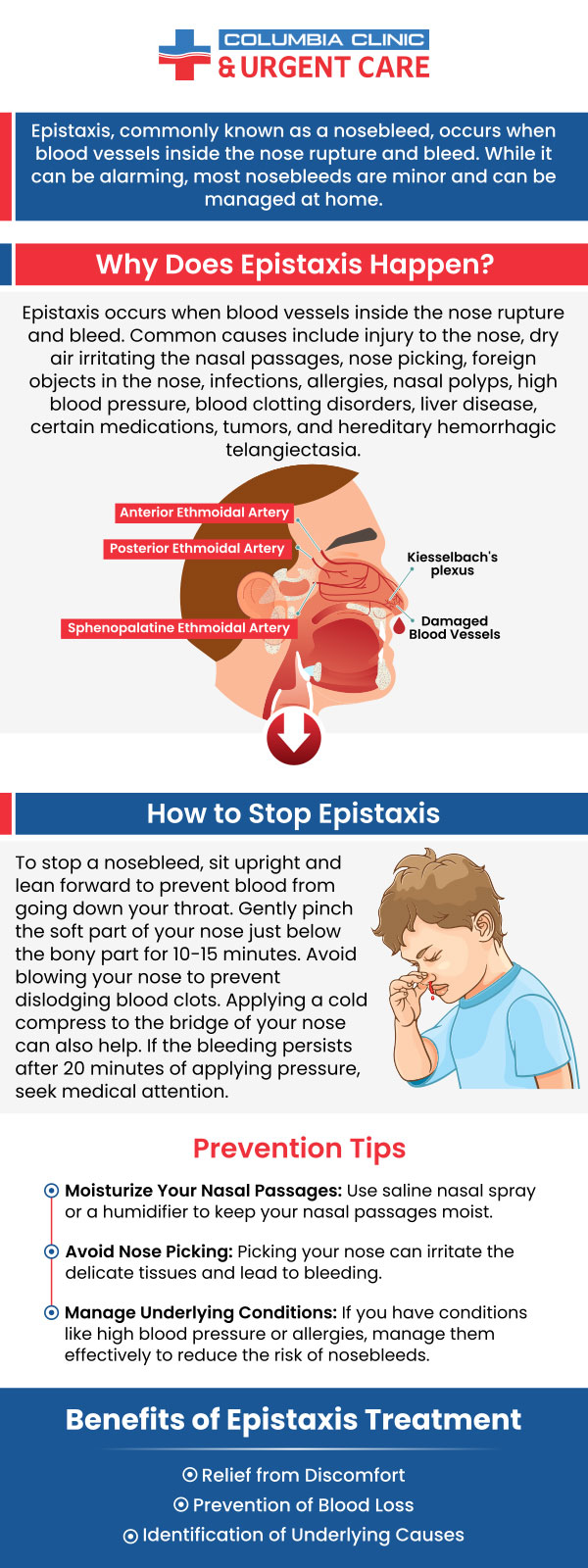
Table of Contents:
Why do children seem more prone to nosebleeds than adults?
Is it true that “nose picking” is the most common cause of pediatric epistaxis?
When should I be worried that my child’s nosebleeds are a sign of an underlying blood disorder?
How can I prevent my child from getting nosebleeds during the dry winter months in Oregon?
How does Columbia Clinic Urgent Care ensure a calm and gentle experience for children who are frightened by the sight of blood?
Trusted urgent care for pediatric nosebleeds
Children experience nosebleeds more frequently than adults because the blood vessels inside their noses are particularly delicate and located close to the surface of the nasal lining. Even minor irritation can cause these small vessels to rupture.
Several factors contribute to increased susceptibility in children, including:
● Frequent touching or rubbing of the nose
● Seasonal allergies or colds
● Dry indoor air
● Developing immune systems
● Increased physical activity or minor facial bumps
In regions like Oregon, indoor heating during colder months can dry nasal passages, making pediatric patients more vulnerable to bleeding. Providers at Columbia Clinic Urgent Care carefully evaluate environmental and medical factors to determine why a child may be experiencing repeated nosebleeds.
Yes, nose picking—known medically as digital trauma—is considered the most common cause of pediatric nosebleeds. Children often touch or pick their noses unintentionally when experiencing itching caused by dryness, allergies, or congestion.
This behavior can irritate or damage fragile blood vessels located in the anterior portion of the nose, leading to bleeding. However, it is important to understand that nose picking is not the only cause. Other contributors may include:
● Nasal infections
● Allergic inflammation
● Frequent sneezing or nose blowing
● Minor injuries during play
● Irritation from dry air
At Columbia Clinic Urgent Care, providers educate parents and children on preventive habits while ensuring that no underlying medical condition is contributing to recurrent bleeding episodes.
Most pediatric nosebleeds are benign and resolve without complications. However, certain warning signs may indicate the need for further evaluation. Parents should seek medical attention if their child experiences:
● Nosebleeds occurring several times per week
● Bleeding lasting longer than 15–20 minutes
● Easy bruising or prolonged bleeding from small cuts
● Frequent gum bleeding
● Family history of bleeding disorders
During an evaluation at Columbia Clinic Urgent Care, providers assess the child’s medical history, frequency of episodes, and overall health to determine whether additional testing or specialist referral is necessary. Early assessment helps rule out rare but important conditions such as clotting abnormalities or platelet disorders.
Prevention plays an important role in reducing pediatric nosebleeds, particularly during colder seasons when indoor air becomes dry. Columbia Clinic Urgent Care providers commonly recommend:
● Using a humidifier in bedrooms to maintain moisture levels
● Applying saline nasal sprays or gels to keep nasal passages hydrated
● Encouraging children to avoid nose picking
● Keeping fingernails trimmed short
● Ensuring proper hydration throughout the day
Parents may also be advised to apply a small amount of nasal moisturizer or petroleum-based ointment under medical guidance to protect sensitive tissues. These simple preventive strategies significantly reduce irritation and help maintain healthy nasal lining function.
A nosebleed can be emotionally distressing for children, especially when they see blood unexpectedly. At Columbia Clinic Urgent Care, pediatric care focuses not only on medical treatment but also on emotional reassurance.
The clinic team creates a child-friendly environment by:
● Explaining procedures in age-appropriate language
● Using calm, reassuring communication
● Allowing parents to remain present during evaluation
● Performing examinations gently and efficiently
● Minimizing discomfort whenever possible
Providers understand that anxiety can worsen a child’s distress, so care is delivered with patience and compassion. Techniques such as distraction, reassurance, and step-by-step explanations help children feel safe while treatment is performed.
When necessary, medical interventions—such as topical medications or nasal packing—are completed carefully to control bleeding while maintaining comfort. Columbia Clinic Urgent Care prioritizes both physical treatment and emotional well-being, ensuring children leave feeling reassured rather than frightened.
While most childhood nosebleeds are temporary, recurring or severe episodes should be evaluated by medical professionals. Timely care helps identify triggers, prevent complications, and provide parents with clear guidance for managing future incidents.
At Columbia Clinic Urgent Care, families benefit from walk-in accessibility, experienced providers, and pediatric-focused care tailored to young patients. Whether your child experiences an occasional nosebleed or frequent episodes, the Columbia Clinic team delivers prompt assessment, gentle treatment, and preventive education designed to support long-term nasal health. Parents throughout the community trust Columbia Clinic Urgent Care to provide compassionate, efficient care when pediatric nosebleeds occur—helping children recover quickly while giving caregivers peace of mind. For more information, please contact us or request an appointment online. We have convenient locations to serve you at Tibbetts St Portland, Stark Street Portland, and Tigard, OR. We also accept walk-ins. We serve patients from Tibbetts St Portland, Milwaukie OR, Oak Grove OR, Stark Street Portland, Fairview OR, Happy Valley OR, Gladstone OR, Cedar Mill OR, Tibbetts Street Portland OR, West Linn OR, Aloha OR, Tigard OR, Lake Oswego OR, Tualatin OR, Oregon City OR, and surrounding areas. We also accept walk-ins.





 Send Text
 How May I Help You?