

How Do You Know If You Have Parasites?
If you’re wondering how to know if you have parasites, common signs include unexplained weight loss, abdominal pain, bloating, diarrhea, or fatigue. Infections may also cause skin rashes, itching, or visible changes in your stool. Our team at Columbia Urgent Care can help diagnose and treat parasitic infections effectively, providing personalized care based on your symptoms and medical history. For more information, please contact us or request an appointment online. We have convenient locations to serve you at Tibbetts St Portland, Stark Street, Portland, and Tigard, OR. We also accept walk-ins.
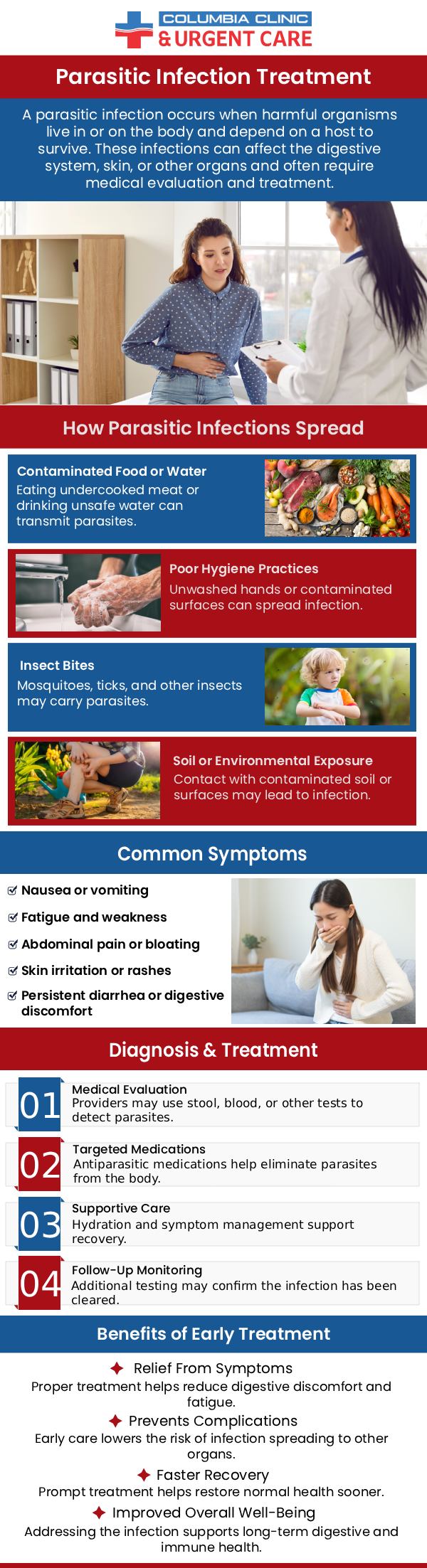
Table of Contents:
Can parasites cause chronic fatigue and unexplained weight loss?
Can I get parasites from food or water?
What are the risks of untreated parasitic infections?
How to test for parasites at Columbia Clinic Urgent Care?
Yes, parasites can cause a range of symptoms, including chronic fatigue and unexplained weight loss. When parasites infest the body, they can interfere with the normal absorption of nutrients, leading to malnutrition and weight loss. This is particularly common with gastrointestinal parasites, which directly affect digestion. As these parasites consume the nutrients from the food you eat, the body can become depleted of essential vitamins and minerals, leading to fatigue and weakness.
Chronic fatigue may also be a result of the body’s ongoing immune response to the parasitic infection. As the immune system works to fight off the infection, energy levels can decrease, causing persistent tiredness. Additionally, some parasites, such as those causing intestinal issues, can disrupt normal sleep patterns, further contributing to fatigue.
If you’re experiencing unexplained weight loss or ongoing tiredness, it’s important to consult with a healthcare provider like those at Columbia Clinic Urgent Care. A thorough examination and diagnostic tests can help determine whether a parasitic infection is the underlying cause. Early treatment can prevent more severe health issues and improve overall well-being.
Yes, parasites can be transmitted through contaminated food and water, especially in areas with poor sanitation. Consuming food or water contaminated with parasitic eggs or larvae can lead to infections. Common parasites that spread through food and water include Giardia, Cryptosporidium, and tapeworms. These parasites thrive in unsanitary environments and can contaminate drinking water, fruits, vegetables, and undercooked meat.
Waterborne parasites, such as Giardia, can cause gastrointestinal issues, including diarrhea and stomach cramps. Contaminated food can introduce parasites like Toxoplasma or roundworms, which may lead to symptoms ranging from digestive problems to more severe conditions affecting other organs. It’s important to drink only clean, treated water and to ensure that food is thoroughly cooked, especially meats, to reduce the risk of infection.
At Columbia Clinic Urgent Care, the doctors can help you determine if a parasitic infection is the cause of your symptoms. If you suspect that you have contracted a parasite through food or water, it’s essential to get tested. Early intervention can prevent the infection from worsening and spreading to other parts of the body. By practicing good hygiene, such as washing hands and avoiding consumption of untreated water or undercooked food, you can significantly reduce your risk of parasitic infections.
Untreated parasitic infections can lead to serious and sometimes life-threatening complications. The risk largely depends on the type of parasite, the length of the infection, and the individual’s overall health. In general, untreated parasitic infections can lead to long-term digestive issues, chronic fatigue, anemia, and organ damage.
For instance, intestinal parasites like hookworms or roundworms can lead to nutritional deficiencies, as they absorb nutrients from the food you eat. This can result in significant weight loss, anemia, and a weakened immune system. Some parasitic infections may also migrate to other parts of the body, such as the liver, lungs, or brain, leading to more severe complications like organ failure, neurological damage, or even death.
Moreover, parasitic infections can affect your quality of life by causing symptoms such as abdominal pain, bloating, nausea, vomiting, and diarrhea. Chronic infections can lead to inflammation and irritation in the intestines, making the body more vulnerable to secondary infections or diseases. For people with compromised immune systems, untreated parasitic infections can be even more dangerous, as their bodies may struggle to fight off the infection.
Getting an early diagnosis and treatment at Columbia Clinic Urgent Care is crucial in preventing the development of serious health problems due to parasitic infections. The clinic’s doctors can assess your symptoms, perform diagnostic tests, and provide the necessary treatment to eliminate the infection and reduce the risk of complications.ptions if necessary.
At Columbia Clinic Urgent Care, testing for parasites typically involves a few steps to ensure accurate results and an effective treatment plan. The first step is a comprehensive consultation with one of the clinic’s doctors, where you will discuss your symptoms, medical history, and any potential exposure to contaminated food, water, or environments. Based on this initial evaluation, the doctor may recommend specific tests to detect parasitic infections.
Common tests for parasitic infections include stool samples, blood tests, and sometimes imaging tests. Stool samples are the most common method for detecting gastrointestinal parasites, as parasites such as Giardia or roundworms can often be identified in the feces. Blood tests can help detect other types of parasites, such as malaria or Toxoplasma, which may not be visible in stool samples. Imaging tests, like X-rays or ultrasounds, may be used if the doctor suspects that the parasite has migrated to other organs or tissues.
Once the tests are completed, your doctor at Columbia Clinic Urgent Care will review the results and provide a diagnosis. If a parasitic infection is detected, they will develop a treatment plan tailored to your condition. This may include medication to eliminate the parasites and recommendations for managing symptoms, such as rehydration and dietary changes.
Early detection and treatment are essential for preventing the spread of the infection and ensuring a speedy recovery. By consulting with the experienced doctors at Columbia Clinic Urgent Care, you can ensure that you receive prompt and effective care for parasitic infections.
For more information, please contact us or request an appointment online. We have convenient locations to serve you at Tibbetts St, Portland, Stark Street, Portland, and Tigard, OR. We also accept walk-ins. We serve patients from Tibbetts St Portland, Milwaukie, OR, Oak Grove, OR, Stark Street, Portland, Fairview, OR, Happy Valley OR, Gladstone OR, Cedar Mill OR, Tibbetts Street, Portland, OR, West Linn OR, Aloha, OR, Tigard OR, Lake Oswego OR, Tualatin OR, Oregon City OR, and surrounding areas. We also accept walk-ins.
Check Out Our 5 Star Reviews






 Send Text
 How May I Help You?