

What Is Epistaxis? A Complete Guide to Understanding Nosebleeds
Epistaxis, commonly known as a nosebleed, is the acute loss of blood from the mucosal lining of the nasal cavity, occurring when delicate, superficial blood vessels rupture due to dry air, physical trauma, or underlying health conditions. Most cases originate in the front of the septum (Kiesselbach’s plexus) and can be safely evaluated and treated with conservative measures, such as cauterization or nasal packing, at Columbia Clinic Urgent Care. Understanding its primary causes, proper first-aid techniques, and medical options helps individuals manage sudden episodes effectively and know when to seek prompt, professional care. For more information, please contact us or request an appointment online. We have convenient locations to serve you at Tibbetts St Portland, Stark Street Portland, and Tigard, OR. We also accept walk-ins.
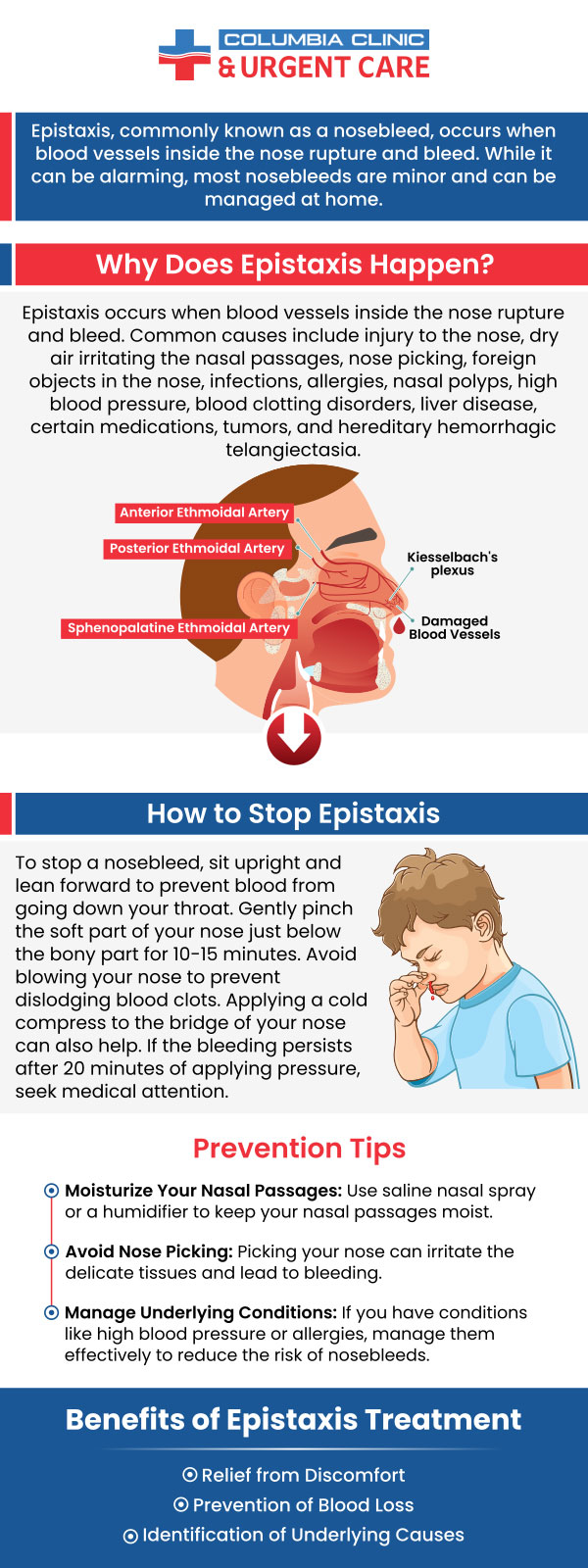
Table of Contents:
What is the anatomical difference between anterior and posterior epistaxis?
What underlying medical conditions can trigger frequent epistaxis?
What diagnostic procedures are used to find the source of chronic nosebleeds?
Where can I get immediate walk-in care for epistaxis at Columbia Clinic Urgent Care?
Understanding the difference between anterior and posterior epistaxis helps us provide the most effective care for our patients.
Anterior epistaxis is the most common type of nosebleed. It occurs in the front part of the nasal septum, specifically in an area called Kiesselbach’s plexus (or Little’s area). This region is located in the lower, front part of the nasal cavity. These vessels are susceptible to bleeding due to trauma, dry air, frequent nose picking, or irritation from allergies or infections. Anterior nosebleeds are usually visible and easier to control with simple first-aid measures, which our medical team can quickly assist you with during your visit.
Posterior epistaxis, on the other hand, originates from deeper areas of the nasal cavity, often from branches of the sphenopalatine artery. This type of nosebleed is less common, but tends to be more severe and challenging to manage. Posterior nosebleeds are more likely to affect older adults and are sometimes linked to underlying conditions like high blood pressure or blood vessel disorders. Because the bleeding occurs further back in the nose, it may not be easily visible and may require more advanced treatment options, which our urgent care providers are equipped to handle.
Recurring nosebleeds, also known as frequent epistaxis, can be more than just an inconvenience—they may indicate an underlying medical issue that requires professional evaluation. At Columbia Clinic Urgent Care, our experienced medical team is equipped to assess the many potential causes of frequent nosebleeds and provide prompt, comprehensive care.
Some common causes of recurrent nosebleeds include disorders that affect the blood’s ability to clot, such as hemophilia or von Willebrand disease. Medications that thin the blood and platelet dysfunction can also increase your risk. High blood pressure (hypertension), if left uncontrolled, may damage the delicate blood vessels in your nose, making nosebleeds more likely.
Other health conditions, such as chronic liver or kidney disease, can interfere with normal clotting mechanisms and contribute to frequent nosebleeds. Structural issues in the nose can also lead to recurrent bleeding. Autoimmune diseases, including granulomatosis with polyangiitis, may cause inflammation of the nasal blood vessels, resulting in repeated nosebleeds.
Genetic conditions, like hereditary hemorrhagic telangiectasia, can cause abnormal blood vessels that bleed easily. In rare cases, certain cancers, such as leukemia or tumors in the nasal cavity, may present with frequent nosebleeds as a symptom.
If you or a loved one are experiencing nosebleeds that are hard to stop, happen frequently, or are associated with other symptoms like bruising, fatigue, or unexplained weight loss, it’s important to seek medical attention. At Columbia Clinic Urgent Care, we can evaluate, diagnose, and treat the underlying causes of frequent nosebleeds and refer you to a specialist if needed.
At Columbia Clinic Urgent Care, our experienced healthcare providers are committed to identifying the source of chronic nosebleeds—also known as recurrent epistaxis—so you can receive effective care and relief.
Comprehensive Evaluation
When you visit us for recurrent nosebleeds, our providers start with a thorough medical history and physical examination. We ask about the frequency, duration, and severity of your nosebleeds, as well as any associated symptoms, current medications, or underlying health conditions (such as bleeding disorders or high blood pressure).
Detailed Nasal Examination
During your visit, our clinicians carefully examine your nasal passages using specialized tools like a headlamp and nasal speculum. This allows us to identify common sources of bleeding, such as prominent blood vessels in the anterior septum (Kiesselbach’s plexus), or to look for signs of trauma, infection, or abnormal growths. If the bleeding source is not immediately visible or is suspected to be deeper in the nasal cavity, we may recommend a nasal endoscopy. This safe procedure uses a thin, flexible camera to provide a detailed view of your nasal passages and sinuses.
Laboratory Testing
When appropriate, Columbia Clinic Urgent Care can perform laboratory tests to check for bleeding disorders or other systemic causes. Common tests include a complete blood count (CBC), coagulation studies (such as PT and aPTT), and sometimes platelet function tests.
Advanced Imaging
If a structural problem such as a tumor or vascular malformation is suspected, our providers may order imaging studies like a CT scan or MRI to obtain detailed pictures of your nasal cavity and surrounding structures. In rare and complex cases, we may refer you for angiography to precisely locate the bleeding site, especially if surgery might be needed.
If you are experiencing a nosebleed (epistaxis) and need immediate medical attention, Columbia Clinic Urgent Care is here to help—no appointment necessary. Our walk-in clinics in the Portland area are fully equipped to manage sudden nosebleeds, providing fast and effective care to stop the bleeding and address any underlying issues.
Upon arrival at any Columbia Clinic Urgent Care location, you will be promptly evaluated by our experienced healthcare professionals. We offer comprehensive treatment options for nosebleeds, including nasal packing, cauterization, and prescription medications when needed. Our team will ensure your comfort and safety throughout your visit.
If your nosebleed is severe, happens frequently, or is accompanied by symptoms such as dizziness, weakness, or trouble breathing, Columbia Clinic Urgent Care can provide immediate stabilization. If necessary, we can also coordinate with local emergency services for advanced care. For more information, please contact us or request an appointment online. We have convenient locations to serve you at Tibbetts St Portland, Stark Street Portland, and Tigard, OR. We serve patients from Tibbetts St Portland, Milwaukie, OR, Oak Grove, OR, Stark Street, Portland, Fairview, OR, Happy Valley OR, Gladstone OR, Cedar Mill OR, Tibbetts Street, Portland, OR, West Linn OR, Aloha, OR, Tigard OR, Lake Oswego OR, Tualatin OR, Oregon City OR, and surrounding areas. We also accept walk-ins.
Check Out Our 5 Star Reviews






 Send Text
 How May I Help You?
