

Common Epistaxis Causes: Why You Are Getting Nosebleeds
Frequent nosebleeds can be concerning, especially when they happen without an obvious reason or begin occurring more often. Epistaxis may develop when delicate blood vessels inside the nose become irritated, dry, inflamed, or damaged. Understanding the common causes of nosebleeds at Columbia Clinic Urgent Care can help you recognize possible triggers and know when a medical evaluation may be appropriate. For more information, please contact us or request an appointment online. We have convenient locations to serve you at Tibbetts St Portland, Stark Street Portland, and Tigard, OR. We also accept walk-ins.
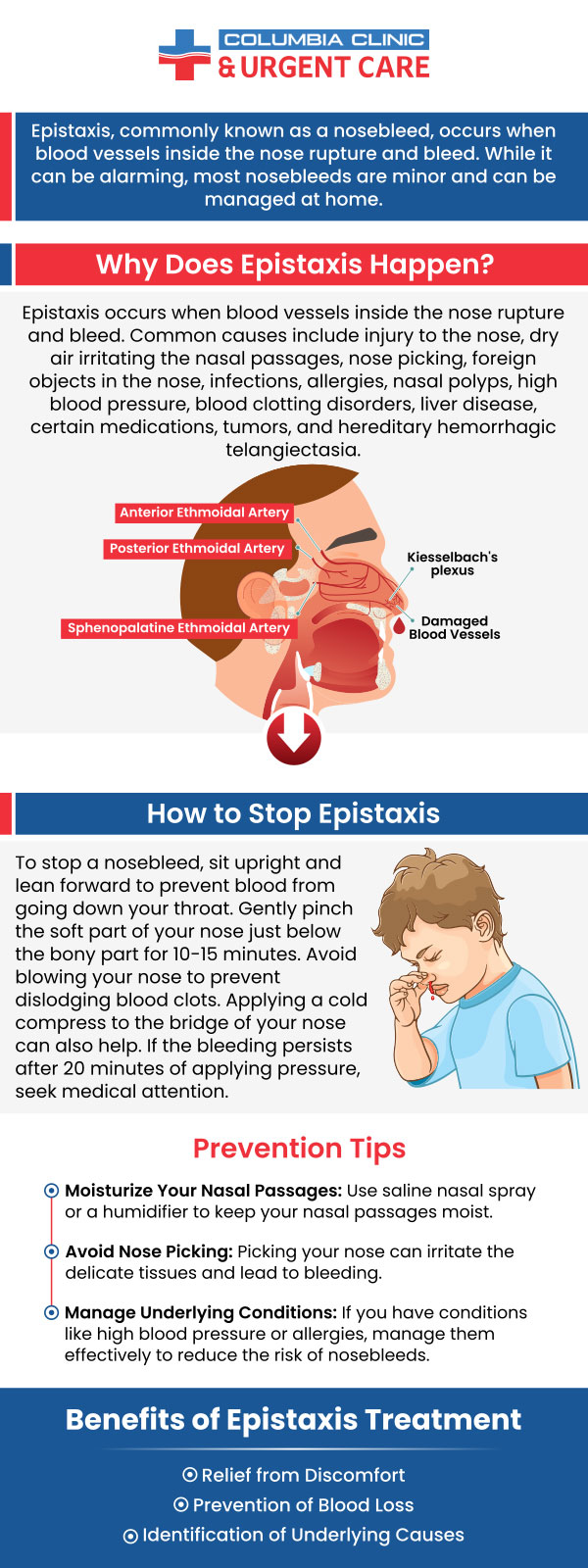
Table of Contents:
What are the most common environmental triggers for epistaxis?
Can high blood pressure directly cause a nosebleed?
Does chemical exposure or nasal spray misuse trigger nosebleeds?
Can an underlying sinus infection cause chronic nosebleeds?
Can I get evaluated for recurring nosebleeds at Columbia Clinic Urgent Care?
Understanding the common environmental triggers can help you prevent future occurrences and know when it’s time to seek medical attention.
Common Environmental Triggers:
● Dry Air: Especially during the winter months or when indoor heating is used, the air can become dry. This lack of humidity dries out the nasal passages, making them more prone to cracking and bleeding.
● Sudden Temperature Changes: Whether you’re coming in from chilly Oregon weather to a warm indoor environment, rapid changes in temperature can cause the blood vessels in your nose to expand and contract quickly, increasing the risk of a nosebleed.
● Environmental Irritants: Exposure to cigarette smoke, strong odors, or chemical fumes can irritate the sensitive lining inside your nose. Seasonal allergens such as pollen, dust, and mold can also cause inflammation and frequent nose blowing, both of which may lead to nosebleeds.
● High Altitude Travel: If you’re traveling to higher elevations (such as Mount Hood or other mountain areas), the thinner, drier air can make your nasal passages more vulnerable to drying out and bleeding.
● Nose Picking or Blowing: Frequent or forceful nose blowing, or even nose picking, especially when your nose is already irritated, can injure the delicate nasal lining and cause bleeding.
While it’s a common belief that hypertension is a main cause of nosebleeds, research shows that this is rarely the case. Most nosebleeds, especially those that start in the front of the nose (anterior nosebleeds), are usually triggered by local factors such as dry air, minor trauma (like nose picking), allergies, or nasal infections.
However, if you have severe or poorly controlled high blood pressure, your risk for nosebleeds may increase. Elevated blood pressure can make the blood vessels inside your nose more fragile and less able to constrict after minor injuries, which may lead to bleeding. This is particularly true for older adults or patients with long-standing hypertension. In rare situations, a sudden, significant spike in blood pressure—a hypertensive crisis—can be associated with spontaneous nosebleeds.
If you have high blood pressure and experience frequent or heavy nosebleeds, it’s important to seek medical care. At Columbia Clinic Urgent Care, our healthcare providers can assess your symptoms, check your blood pressure, and rule out any underlying conditions that may require treatment. Frequent nosebleeds in someone with hypertension could signal poorly controlled blood pressure or other health concerns that need attention.
At Columbia Clinic Urgent Care, we often see patients who are concerned about frequent or severe nosebleeds, also known as epistaxis. Two common—and sometimes overlooked—causes of nosebleeds are chemical exposure and misuse of nasal sprays.
Chemical Exposure
Exposure to certain chemicals—such as strong cleaning products, industrial fumes, or smoke—can irritate and dry out the sensitive lining inside your nose. This irritation can make the small blood vessels in your nose more prone to bleeding, especially if you already have nasal sensitivities or are in an environment with poor ventilation. If your work or home environment exposes you to harsh chemicals, it’s important to take steps to minimize inhalation and protect your nasal passages.
Nasal Spray Misuse
Nasal sprays, especially those containing decongestants or steroids, are effective for treating congestion and inflammation. However, overusing these sprays or using them incorrectly can dry out or damage the nasal lining, increasing the risk of nosebleeds. Some decongestant sprays work by constricting blood vessels, and prolonged use can thin the nasal tissues. Likewise, excessive use of steroid sprays can weaken the nasal lining.
How to Protect Your Nasal Health
To reduce your risk of nosebleeds:
● Avoid unnecessary exposure to harsh chemicals whenever possible.
● Use nasal sprays only as directed by your healthcare provider.
● Maintain good nasal hygiene by keeping your nasal passages moist—using saline rinses can help.
● Seek medical advice if you experience frequent or severe nosebleeds.
Yes, an underlying sinus infection can contribute to chronic nosebleeds, although it is not the most common cause. Sinus infections, also known as sinusitis, lead to inflammation of the nasal passages and sinus cavities. This inflammation can make the delicate blood vessels inside your nose more fragile and prone to bleeding. Repeated irritation from sinus infections—especially if you are blowing your nose frequently, sneezing, or using nasal decongestant sprays—can further damage and dry out the nasal lining, increasing your risk for chronic nosebleeds.
It’s important to remember that while sinus infections can be a contributing factor, chronic nosebleeds can also result from other causes, such as dry air, allergies, use of certain medications (like blood thinners), underlying medical conditions (such as bleeding disorders), or structural issues within the nose.
If you are experiencing recurring nosebleeds, Columbia Clinic Urgent Care is here to help. Frequent nosebleeds—medically known as epistaxis—can result from a range of factors, including dry air, allergies, nasal injury, certain medications, or underlying health conditions. At Columbia Clinic Urgent Care, our experienced medical team can evaluate your symptoms. If needed, we can also perform diagnostic tests to identify the underlying cause of your nosebleeds.
Based on our assessment, we will provide appropriate treatment options and practical advice to help you prevent future episodes. If your condition requires further specialized care, we can facilitate a referral to an ENT (ear, nose, and throat) specialist or another appropriate provider.
Your safety is our top priority. If your nosebleeds are severe, involve heavy bleeding, or come with other symptoms such as difficulty breathing or fainting, please seek immediate medical attention or visit the nearest emergency room.
For more information, please contact us or request an appointment online. We have convenient locations to serve you at Tibbetts St Portland, Stark Street Portland, and Tigard, OR. We serve patients from Tibbetts St Portland, Milwaukie, OR, Oak Grove, OR, Stark Street, Portland, Fairview, OR, Happy Valley OR, Gladstone OR, Cedar Mill OR, Tibbetts Street, Portland, OR, West Linn OR, Aloha, OR, Tigard OR, Lake Oswego OR, Tualatin OR, Oregon City OR, and surrounding areas. We also accept walk-ins.
Check Out Our 5 Star Reviews






 Send Text
 How May I Help You?
