

How to Manage and Treat Shingles Pain?
If you’re dealing with shingles pain, Columbia Clinic Urgent Care offers expert guidance on managing and treating this painful condition. Our doctors provide comprehensive care, including antiviral medications and pain management strategies, to reduce symptoms and promote healing. Trust our team to guide you through the process of managing and treating shingles pain effectively. For more information, please contact us or request an appointment online. We have convenient locations to serve you at Tibbetts St Portland, Stark Street Portland, and Tigard, OR. We also accept walk-ins.
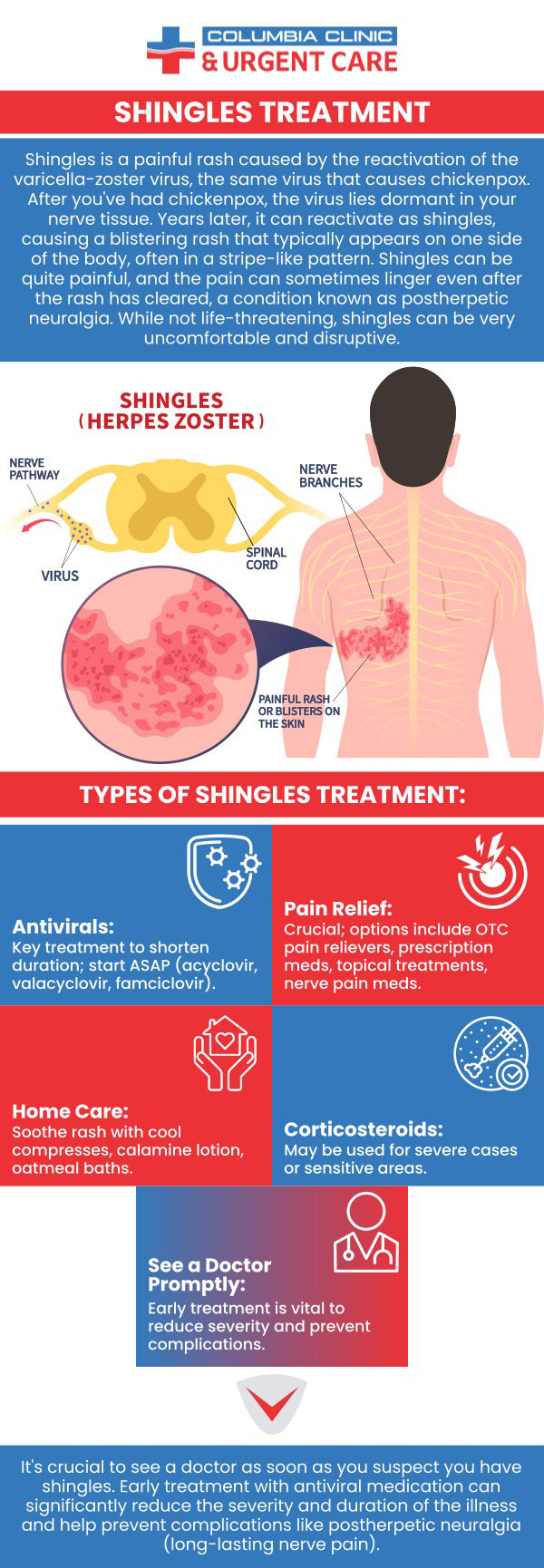
Table of Contents:
What are the key differences between shingles pain and other types of nerve pain?
Is it possible to experience shingles pain without visible rashes?
Are there any long-term strategies offered by doctors at Columbia Clinic Urgent Care to prevent shingles pain recurrence?
Can a cold compress or heat pad help alleviate shingles pain?
Shingles pain—also known as postherpetic neuralgia when it persists after the rash—has several features that set it apart from other types of nerve (neuropathic) pain. We are experienced in identifying and treating shingles, ensuring that you get fast, effective relief and guidance.
What makes shingles pain different?
●History of Varicella-Zoster Virus: Shingles pain is directly linked to a previous infection with the varicella-zoster virus, the same virus that causes chickenpox. If you’ve had chickenpox in the past, you could be at risk for shingles.
●Distinctive Presentation: Pain from shingles often begins with burning, tingling, or stabbing sensations in a specific, localized area—usually on one side of the torso or face. This is often followed (or accompanied) by a blistering rash that appears in a band-like (dermatomal) pattern.
●Severe & Persistent Discomfort: Shingles pain tends to be severe and may persist even after the rash resolves, a condition called postherpetic neuralgia.
●Skin Sensitivity: Many patients experience heightened skin sensitivity (allodynia), where even light touch or clothing can cause significant pain.
How is shingles pain different from other nerve pain?
●Diabetic Neuropathy: Usually causes numbness or tingling in both feet or hands and does not follow a single nerve or cause a rash.
●Sciatica: Causes pain radiating down the leg, but isn’t associated with a rash or a localized dermatomal pattern.
●Other Neuropathic Pain: Conditions like trigeminal neuralgia have different triggers and symptom patterns and are not linked to a skin rash.
Shingles can be extremely painful and potentially lead to complications if not treated early. At Columbia Clinic Urgent Care, we can:
●Provide a prompt diagnosis based on your symptoms and physical exam
●Prescribe antiviral medications to help reduce the severity and duration of your illness if started early
●Offer pain management options to help you stay comfortable
●Advise you on how to prevent complications, including postherpetic neuralgia
If you suspect you have shingles—especially if you notice a painful, localized rash—don’t wait. Early treatment is key to feeling better and preventing long-term pain. Visit Columbia Clinic Urgent Care for expert, same-day care and support.
Yes, it is possible to experience pain from shingles even if you don’t develop the characteristic visible rash. This condition is known as “zoster sine herpete.” Shingles, or herpes zoster, occurs when the varicella-zoster virus (the same virus that causes chickenpox) becomes reactivated in your body. While shingles most often causes a painful, blistering skin rash on one side of the body, some people may experience only the nerve pain—described as burning, tingling, or stabbing sensations—without any skin changes.
Diagnosing shingles without a rash can be challenging because its symptoms can mimic other health problems, such as musculoskeletal pain, nerve disorders, or even heart conditions, depending on the area affected. At Columbia Clinic Urgent Care, our experienced medical providers use a thorough clinical evaluation, your medical history, and, when necessary, specialized laboratory tests to help confirm the diagnosis.
At Columbia Clinic Urgent Care, our physicians are dedicated to providing both immediate relief and long-term solutions for patients suffering from shingles and its complications—particularly postherpetic neuralgia, a persistent nerve pain that sometimes follows a shingles outbreak. We strongly recommend the shingles vaccine, such as Shingrix, for adults over 50 and those with weakened immune systems, as it significantly lowers the risk of future outbreaks and chronic nerve pain.
In addition to vaccination, our providers work closely with patients to strengthen their immune system through practical lifestyle changes, including balanced nutrition, regular physical activity, and the careful management of chronic conditions like diabetes and high blood pressure. We also emphasize the importance of stress reduction, as elevated stress levels can increase the likelihood of shingles recurrence.
For patients experiencing severe pain during or after a shingles episode, we offer personalized follow-up care to monitor progress and adjust pain management strategies as needed. This may include prescribing antiviral medications for future outbreaks, or, when appropriate, low-dose antidepressants or anticonvulsants to help manage or prevent long-lasting nerve pain.
At Columbia Clinic Urgent Care, we understand that shingles can cause significant pain and discomfort. Many patients ask about at-home remedies to help manage their symptoms. Both cold compresses and heat pads can provide relief for shingles pain, but their effectiveness can vary from person to person.
Applying a cold compress to the affected area may help reduce inflammation, numb the skin, and relieve pain and itching—especially during the early stages when the rash is blistered and most uncomfortable. For safety, always use a clean cloth and never place ice directly on the skin to avoid further irritation or damage.
Some individuals may find that gentle heat, such as a warm (not hot) heat pad, helps ease nerve pain and relax the muscles around the rash. However, heat should be used with caution. If the skin is broken or blistered, excessive warmth may worsen irritation or inflammation.
The choice between cold compresses and heat pads often depends on personal comfort and how your body responds. If you have open sores or blisters, cold compresses are usually the safer option. Regardless of the method, limit use to short intervals—about 15 to 20 minutes at a time—and check your skin regularly for any signs of irritation.
If you have any questions, underlying health conditions, or if your pain persists, the team at Columbia Clinic Urgent Care is here to help. For more information, please contact us or request an appointment online. We have convenient locations to serve you at Tibbetts St Portland, Stark Street Portland, and Tigard, OR. We also accept walk-ins. We serve patients from Tibbetts St Portland, Milwaukie OR, Oak Grove OR, Stark Street Portland, Fairview OR, Happy Valley OR, Gladstone OR, Cedar Mill OR, Tibbetts Street Portland OR, West Linn OR, Aloha OR, Tigard OR, Lake Oswego OR, Tualatin OR, Oregon City OR, and surrounding areas. We also accept walk-ins.





 Send Text
 How May I Help You?