

Severe Epistaxis: When to See a Doctor for a Nosebleed
While most minor nosebleeds can be managed at home with simple pinching and forward pressure, severe epistaxis that lasts longer than twenty minutes requires immediate professional medical attention. You should urgently see a doctor if the bleeding is unusually heavy, accompanied by a rapid heartbeat, difficulty breathing, or if you find yourself swallowing large amounts of blood. Timely medical evaluation will help identify serious underlying causes and provide specialized medical interventions to safely stop the hemorrhage and protect your overall health. For more information, please contact us or book an appointment online. We have convenient locations to serve you in Portland at 82nd Avenue Portland OR and Mall 205 Portland OR.
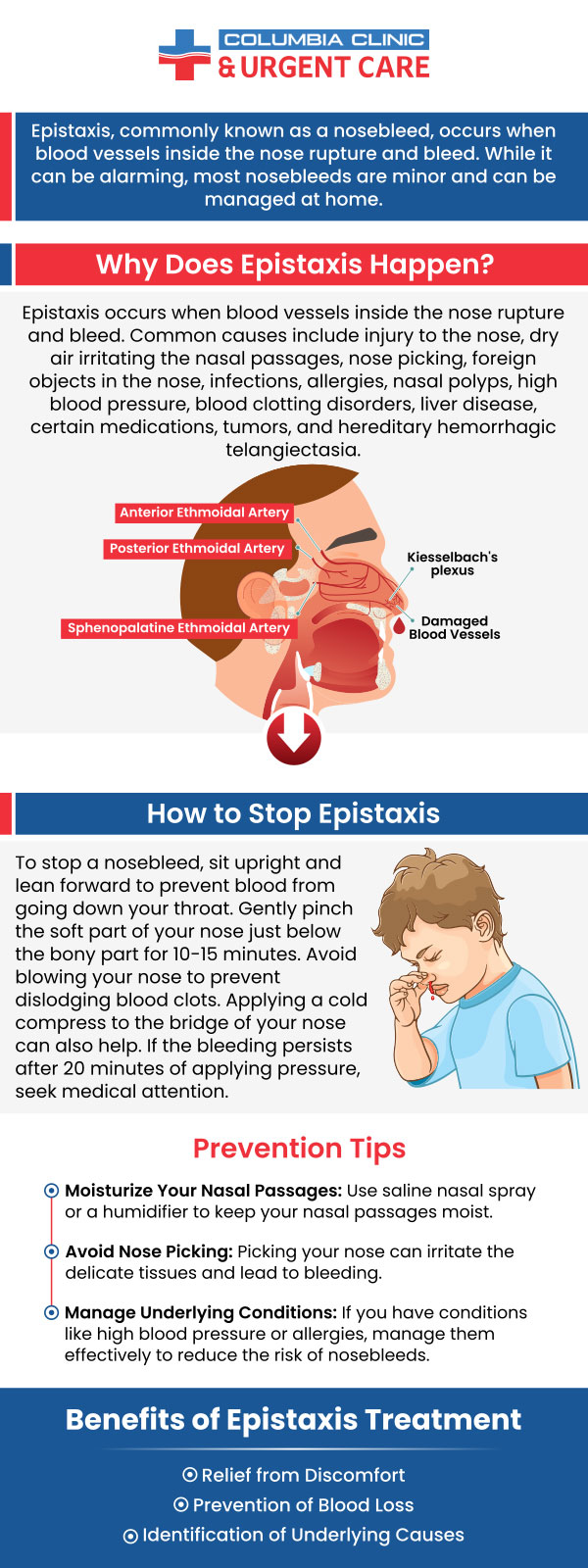
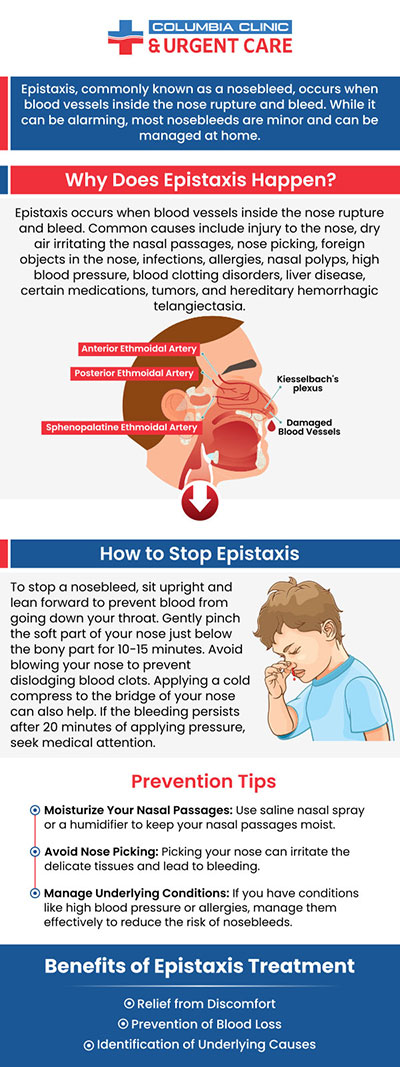
Table of Contents:
How long should a nosebleed last before I seek emergency medical attention?
Is it normal to swallow blood or pass clots during a severe nosebleed?
Should I stop taking blood thinners if I have a severe nosebleed?
If I experience a severe, prolonged nosebleed, should I go straight to the ER or can Columbia Clinic provide urgent care?
Most nosebleeds stop within 10–15 minutes with proper pressure. Seek emergency medical care if bleeding continues after 20 minutes of firm, uninterrupted pressure, even if it seems mild.
To help stop a nosebleed:
● Sit upright and lean slightly forward.
● Breathe through your mouth and hold pressure continuously. Use a timer, and don’t release your grip to check.
● Spit out blood that enters your mouth rather than swallowing it.
● Don’t tilt your head back, lie flat, or stuff tissues into your nose.
Don’t wait 20 minutes if bleeding is heavy, you have trouble breathing, feel faint or very weak, or the nosebleed follows a significant head or facial injury. Seek emergency care right away. Call 911 for severe symptoms, and don’t drive yourself if you feel dizzy or faint.
For frequent nosebleeds that stop with pressure, contact Columbia Clinic Urgent Care for an evaluation. Ongoing bleeding or severe symptoms require emergency care rather than an urgent care visit.
Clots can also form inside the nose and come out through the nostrils or be spat out through the mouth. While this can happen, heavy bleeding, repeated large clots, or significant blood flowing down your throat should not be dismissed as normal. Bleeding farther back in the nose may require emergency treatment.
If bleeding is severe or you have emergency symptoms, go directly to an emergency department rather than an urgent care clinic.
Swallowed blood can irritate your stomach, causing nausea or vomiting, and may darken your stool. However, vomiting blood or passing black, tarry stools should not automatically be attributed to a nosebleed, as these can also indicate bleeding in the digestive tract.
Take these first-aid steps:
● Breathe through your mouth and spit out blood rather than swallowing it.
● Do not tilt your head back, lie flat, or push tissues deep into your nose.
Once the bleeding stops, avoid blowing or picking your nose, strenuous activity, and hot drinks for about 24 hours.
Do not stop or skip a prescribed blood thinner on your own—but a severe nosebleed needs urgent medical attention. Columbia Clinic Urgent Care encourages patients taking blood thinners to seek prompt medical guidance for significant or recurring nosebleeds. Stopping your medication without instructions can increase your risk of a stroke or dangerous blood clot. Serious bleeding, however, may require a clinician to temporarily hold the medication or provide treatment to reverse its effects.
What to Do If Your Nose Is Bleeding
● Sit upright and lean forward.
● Maintain constant pressure for 15–20 minutes without releasing it to check.
● Breathe through your mouth and spit out blood rather than swallowing it.
Do not tilt your head back, lie flat, or pack your nose with tissues.
When to Seek Emergency Care
Call 911 immediately if bleeding is heavy or rapidly flowing, you have trouble breathing, or you feel faint, weak, confused, or have chest pain.
If bleeding continues after 15–20 minutes of proper pressure, go to an emergency department—especially if you take a blood thinner.
A minor nosebleed that stops with pressure may be appropriate for assessment at Columbia Clinic Urgent Care. Call your preferred location to confirm its hours and whether it can evaluate your nosebleed, as services and equipment may vary.
What to Do During a Nosebleed
● Sit upright and lean forward.
● Hold steady pressure for 15–20 minutes without releasing it to check.
● Breathe through your mouth and spit out blood rather than swallowing it.
For more information, please contact us or book an appointment online. We have convenient locations to serve you in Portland at 82nd Avenue Portland OR and Mall 205 Portland OR. We serve patients from Tibbetts St Portland, Milwaukie OR, Oak Grove OR, Stark Street Portland, Fairview OR, Gladstone OR, Cedar Mill OR, Tibbetts Street Portland OR, West Linn OR, Oregon City OR, and surrounding areas.
Check Out Our 5 Star Reviews






 Send Text
 How May I Help You?
