

Stop Chronic Epistaxis: Professional Nosebleed Treatment in Tigard, OR
Dealing with continuous, heavy nosebleeds goes beyond a simple inconvenience and often requires more than just standard at-home first aid. Specialized medical care is essential to identify damaged blood vessels, manage blood pressure spikes, or uncover other underlying conditions triggering your symptoms. Visit Columbia Clinic Urgent Care in Tigard, OR, for targeted, professional treatments designed to permanently halt chronic epistaxis and restore your peace of mind. For more information, please contact us or book an appointment online. We are located at 12455 SW 68th Avenue, Tigard, OR 97223.
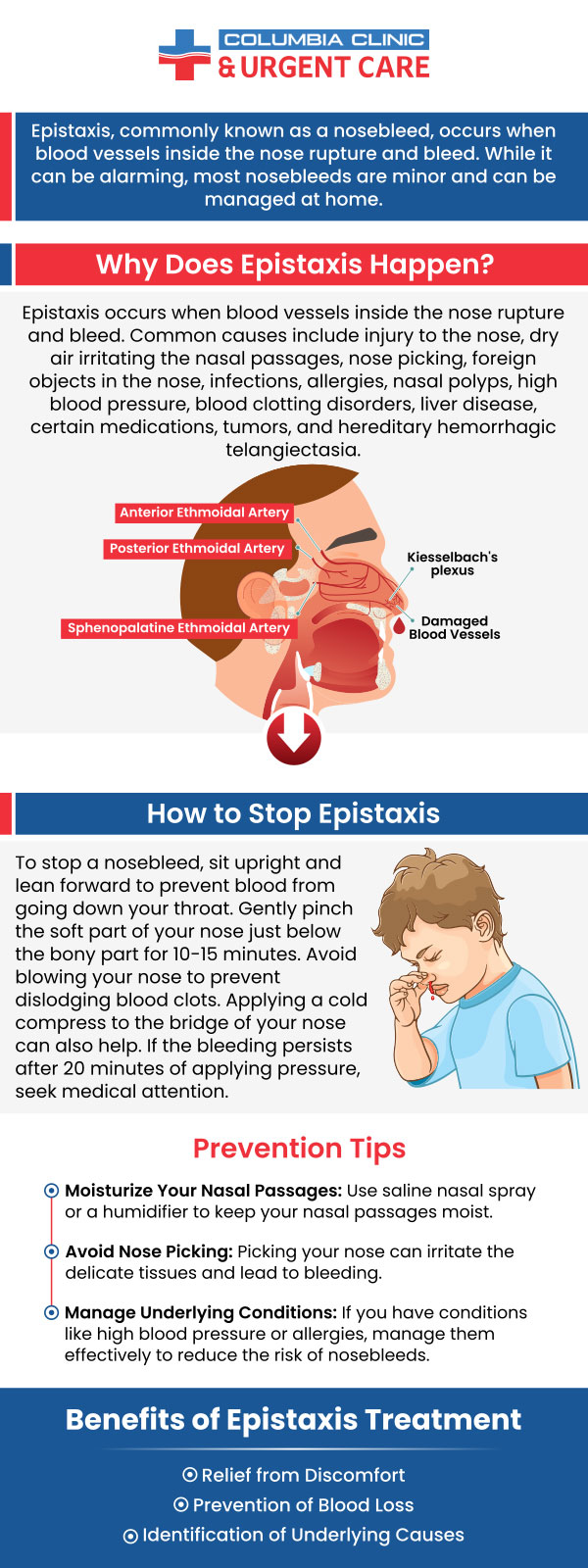
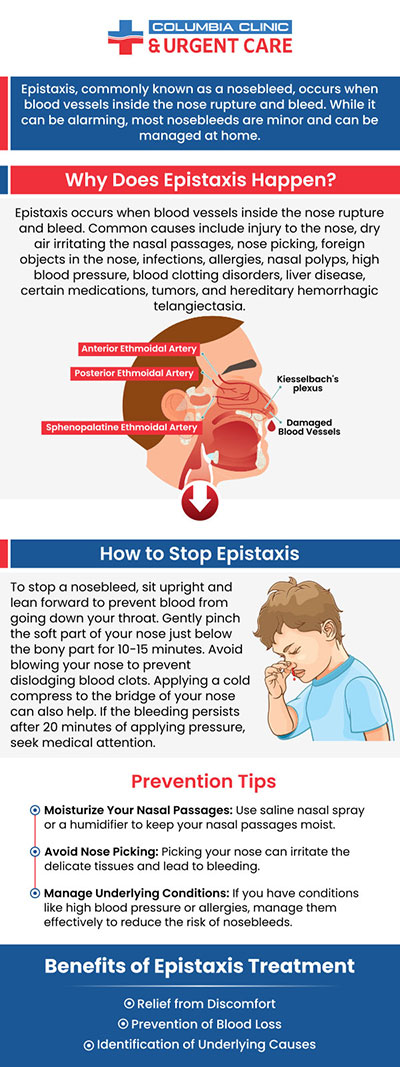
Table of Contents:
What in-office treatments are available to stop frequent nosebleeds permanently?
Is nasal cauterization painful, and how long does it take?
How quickly can I resume normal activities after an epistaxis procedure?
Can the specialists at Columbia Clinic in Tigard treat pediatric nosebleeds as well as adult cases?
Frequent nosebleeds can be uncomfortable and concerning. Columbia Clinic Urgent Care can be a starting point for evaluating recurrent nosebleeds and determining the appropriate next steps. Treatment depends on where the bleeding starts, how severe it is, and whether dryness, irritation, medications, or another medical condition is contributing.
Some treatments can provide lasting relief, but no procedure guarantees that nosebleeds will never return.
Evaluation and initial treatment
An urgent care evaluation may include examining the nose, reviewing your symptoms and medications, and checking for factors that increase bleeding risk. For an active nosebleed, initial treatment may involve direct pressure and a topical medication to help narrow blood vessels.
Depending on the examination findings and available services, the clinician may recommend additional treatment or referral.
Nasal cauterization
When a small, clearly visible blood vessel causes repeated bleeding, nasal cauterization may help. Cauterization can reduce recurrence, although another area may bleed later. Temporary discomfort, crusting, and minor bleeding can occur. Rarely, cautery can damage the nasal septum, making careful treatment important.
Nasal packing or absorbable materials
If active bleeding does not stop with initial measures, a clinician may use absorbable material, a nasal sponge, or a balloon device to apply pressure and support clotting. These treatments control the current episode rather than permanently prevent future nosebleeds.
Some types of packing require a follow-up visit for removal. Your clinician will explain any aftercare instructions and when to seek further treatment.
ENT evaluation for recurring or difficult-to-control bleeding
An ENT referral may be appropriate if nosebleeds keep returning, occur repeatedly on one side, or continue despite treatment. The specialist may use a thin camera called a nasal endoscope to locate the bleeding source and guide treatment.
Preventing future nosebleeds
After treatment, protecting the nasal lining can help reduce recurrence. Your clinician may recommend:
Saline spray or nasal moisturizing gel.
● A humidifier, especially in dry indoor environments.
● Avoiding nose picking and forceful nose blowing.
● Reviewing nasal spray technique and medications that may contribute to bleeding.
Do not stop prescribed blood thinners without medical advice.
If you have frequent nosebleeds, Columbia Clinic Urgent Care can help you determine whether you need treatment. One option a clinician may recommend is nasal cauterization, which seals a small blood vessel inside the nose. The procedure is generally quick and causes mild discomfort rather than significant pain.
Before treatment, a clinician typically applies a topical anesthetic to numb the inside of your nose. You may still feel pressure, tingling, or a brief burning or stinging sensation during treatment.
Tell your clinician if you experience sharp or significant pain so they can pause and assess whether you need more numbing.
The cauterization itself usually takes a few seconds to a couple of minutes. Including the examination, numbing, and checking that bleeding has stopped, a straightforward procedure may take around 15–30 minutes. This does not include waiting time, and more complicated bleeding may require additional care.
Mild soreness, crusting, or a small amount of blood-stained discharge can occur after nasal cauterization. Discomfort often improves within a few days, while the treated area generally heals over one to two weeks.
Follow the treating clinician’s aftercare instructions. These may include:
● Avoiding nose picking and forceful nose blowing.
● Limiting strenuous activity for the recommended period.
● Using saline spray, moisturizing gel, or an ointment if advised.
For an active nosebleed, sit upright, lean forward, and pinch the soft part of your nose continuously for 15–20 minutes without releasing pressure to check.
Seek urgent medical care if bleeding continues despite this pressure. Heavy bleeding, dizziness, fainting, or difficulty breathing warrants emergency care rather than waiting for an urgent care visit.
After cauterization, contact your treating clinician if you develop increasing pain, fever, or foul-smelling discharge. For recurring nosebleeds that are not an emergency, Columbia Clinic Urgent Care can evaluate your symptoms and discuss appropriate next steps.
Most people can return to light daily activities within 24–48 hours after treatment for a nosebleed (epistaxis). Recovery depends on how the bleeding was treated, its severity, and your overall health. If you visit Columbia Clinic Urgent Care for a nosebleed, follow the clinician’s discharge instructions for returning to work, school, and exercise.
After a straightforward nasal cauterization, you may feel ready for desk work or school the next day if the bleeding has stopped. If nasal packing is needed, you may need to limit activity until it is removed or your treating clinician confirms that recovery is progressing. More involved treatment, such as surgery or arterial embolization, requires specialist care and may mean several days to a week or longer before returning to your usual routine.
To help prevent another nosebleed:
● Avoid strenuous exercise, heavy lifting, bending over, and straining for at least 48 hours, or longer if instructed. Some procedures require restrictions for one to two weeks.
● Avoid picking or blowing your nose until your clinician says it is safe, and sneeze with your mouth open.
● Do not remove nasal packing yourself unless specifically instructed.
● If you received sedation or general anesthesia, do not drive for at least 24 hours and follow any additional restrictions.
● Do not stop prescribed blood thinners without medical advice.
If bleeding restarts, sit upright, lean forward, and pinch the soft part of your nose continuously for 15–20 minutes. If it does not stop, seek prompt medical evaluation. For heavy bleeding, faintness, or trouble breathing, go to an emergency department.
Nosebleeds in children and adults can often be evaluated at an urgent care clinic. If you’re considering Columbia Clinic Urgent Care, contact the clinic directly to confirm whether its clinicians treat nosebleeds, what ages they accept, and which treatments are available. Frequent or difficult-to-control nosebleeds may require a referral to an ear, nose, and throat (ENT) specialist.
Treatment depends on the severity. Options may include saline spray or nasal gel for dryness, guidance on avoiding nasal irritation, and, when appropriate and available, cauterization or nasal packing. Recurrent nosebleeds may need further evaluation for allergies, medication effects, or bleeding disorders.
For an active nosebleed: Sit upright, lean forward, and pinch the soft part of the nose continuously for 10–15 minutes without releasing to check. Do not tilt your head back. Seek urgent medical care if bleeding continues after about 20 minutes of firm pressure. Seek emergency care sooner for heavy bleeding, trouble breathing, faintness, or bleeding after a significant injury. For more information, please contact us or book an appointment online. We are located at 12455 SW 68th Avenue, Tigard, OR 97223. We serve patients from Tigard OR, Tualatin OR, Beaverton OR, Lake Oswego OR, and surrounding areas.
Check Out Our 5 Star Reviews






 Send Text
 How May I Help You?
