

Comprehensive Care for Epistaxis (Chronic Nosebleeds)
Frequent or severe nosebleeds, medically known as epistaxis, can be both alarming and highly disruptive to your daily routine. Our comprehensive care approach focuses on safely stopping the active bleeding while thoroughly evaluating the underlying causes of your chronic symptoms. By utilizing advanced medical treatments and personalized prevention strategies, Columbia Clinic Urgent Care provides the medical care you need to effectively manage epistaxis and achieve lasting relief. For more information, please contact us or book an appointment online. We have convenient locations to serve you in Portland at 82nd Avenue Portland OR and Mall 205 Portland OR.
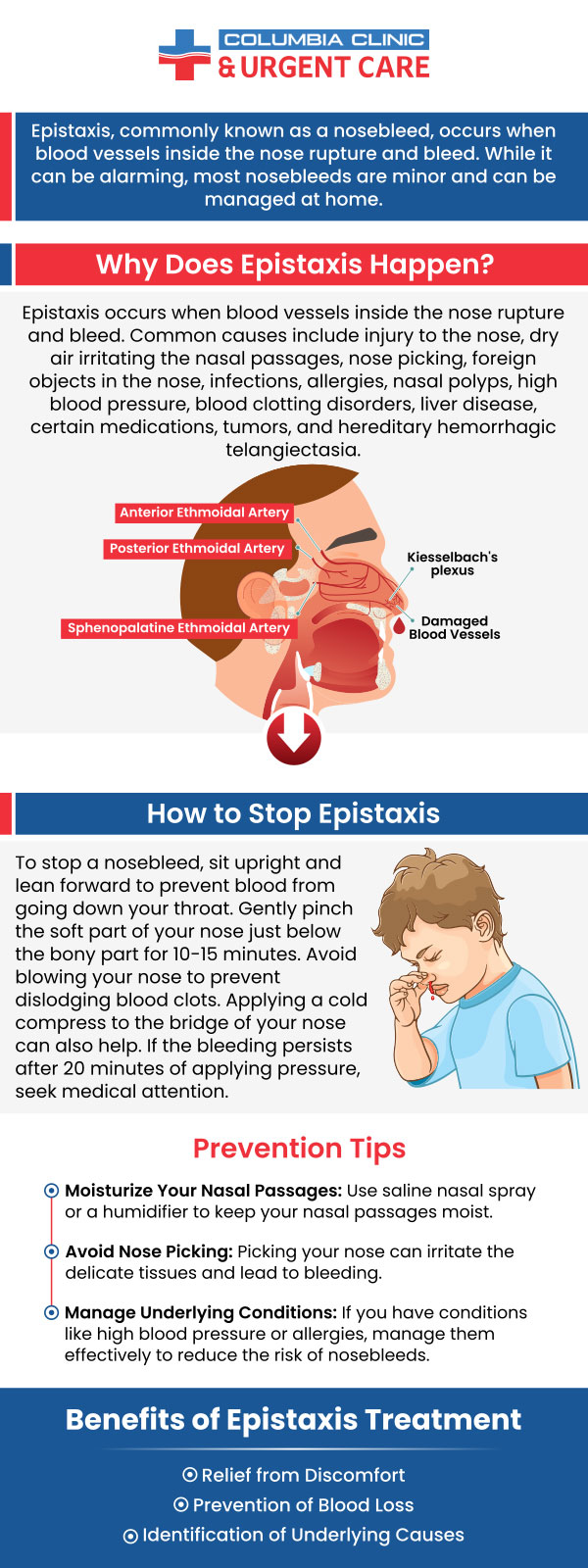
Table of Contents:
What is considered a “chronic” or recurring nosebleed?
Are there underlying health conditions that cause frequent epistaxis?
How is a long-term care plan developed for recurring nosebleeds?
What diagnostic tools does Columbia Clinic use to find the root cause of my chronic epistaxis?
There is no universally accepted number of nosebleeds—or length of time—that defines a nosebleed problem as “chronic.” Recurring nosebleeds are episodes that keep coming back, rather than a single, isolated event. The term “chronic” is sometimes used when this pattern continues over weeks or months.
An occasional nosebleed, especially during dry weather or a cold, is common and usually not serious. However, nosebleeds happening several times a week, continuing over several weeks, or becoming more frequent deserve medical evaluation. Columbia Clinic Urgent Care can help evaluate recurring nosebleeds and determine appropriate next steps. You do not need to wait for a particular frequency if the bleeding is difficult to stop or concerning.
Common causes include dry nasal passages, nose picking or frequent blowing, allergies, and irritation from nasal sprays. Blood-thinning medicines can make bleeding more likely or harder to stop.
Less commonly, repeated nosebleeds may be related to a bleeding disorder, an abnormal blood vessel, or a growth inside the nose. Bleeding repeatedly from the same nostril—especially with persistent blockage—should be checked.
Seek an evaluation if nosebleeds keep returning, interfere with daily life, or occur alongside easy bruising, bleeding gums, unusual fatigue, or a family history of bleeding problems.
A clinician at Columbia Clinic Urgent Care can assess your symptoms, examine your nose, review your medications, and determine whether treatment, testing, or referral to a specialist is appropriate.
Seek prompt medical care if bleeding does not stop after 15–20 minutes of firm, continuous pressure. If you take blood thinners, seek prompt advice for persistent bleeding, but do not stop prescribed medication on your own.
Frequent epistaxis, or nosebleeds, can sometimes be linked to an underlying health condition. However, most nosebleeds result from local irritation—such as dry air, nose picking, forceful nose blowing, allergies, or a respiratory infection—rather than a serious illness.
If you experience recurring nosebleeds, Columbia Clinic Urgent Care can help assess your symptoms and determine whether further evaluation is needed.
Conditions That May Contribute to Frequent Nosebleeds
● Allergies and nasal conditions: Allergic rhinitis, chronic nasal inflammation, and structural problems, such as a deviated septum or a hole in the nasal septum, can leave the nasal lining more vulnerable to dryness, irritation, and bleeding.
● Bleeding disorders: Conditions such as von Willebrand disease, hemophilia, and low platelet counts or impaired platelet function can cause recurrent nosebleeds. Additional signs may include easy bruising, bleeding gums, unusually heavy menstrual periods, or prolonged bleeding after dental work.
● Liver and kidney disease: Liver disease and advanced kidney disease can interfere with normal blood clotting. Blood disorders, including leukemia, are less common causes and typically cause other symptoms or abnormal blood counts.
● Hereditary hemorrhagic telangiectasia (HHT): This inherited condition causes abnormal blood vessels and may lead to repeated spontaneous nosebleeds. Other signs include small red spots on the lips, tongue, face, or fingers and a family history of similar bleeding.
● Nasal or sinus growths: Tumors are a rare cause of nosebleeds. However, persistent bleeding from one nostril—particularly with one-sided blockage, facial pain, or a visible growth—needs medical evaluation.
● High blood pressure: Hypertension is not usually the direct cause of a nosebleed, but poorly controlled blood pressure may make bleeding harder to stop.
Recurring nosebleeds can be uncomfortable and disruptive. At Columbia Clinic Urgent Care, an evaluation can help identify possible causes, address immediate concerns, and guide next steps for prevention or specialist care. A long-term care plan depends on how often bleeding occurs, how severe it is, and whether an underlying condition is contributing.
Finding the cause
A healthcare provider will ask how long each nosebleed lasts, whether it affects one or both nostrils, and what seems to trigger it. They may also review nasal dryness, allergies, injuries, nasal spray use, medications, and any history of unusual bruising or bleeding.
Blood thinners and some anti-inflammatory medicines can contribute to nosebleeds. Do not stop prescribed medications without medical guidance.
An examination may reveal dryness, irritation, or a visible bleeding site. Depending on the findings, further testing or referral to an ear, nose, and throat (ENT) specialist may be recommended. Persistent bleeding, repeated bleeding from one nostril, or an unclear source may require a more detailed nasal examination. Blood tests may be appropriate if there are concerns about anemia or a bleeding disorder.
Preventing future episodes
Preventive care often focuses on protecting the nasal lining and reducing irritation. Your care plan may include:
● Using saline nasal spray or a saline-based nasal gel to relieve dryness.
● Running a clean humidifier in dry indoor environments.
● Avoiding nose picking, forceful nose blowing, and inserting tissues or cotton swabs into the nose.
● Reviewing allergy treatment and nasal spray technique. Sprays should generally be directed away from the central wall of the nose.
● Temporarily avoiding strenuous exercise, heavy lifting, and forceful nose blowing after an episode.
A Columbia Clinic Urgent Care provider can help you understand which measures may be appropriate for your symptoms and when additional evaluation is needed.
Treating persistent or recurring bleeding
Treatment depends on the bleeding source and severity. A visible bleeding vessel may sometimes be treated with cauterization, while more significant bleeding may require nasal packing. These treatments depend on clinical findings and available services; some cases require ENT care or emergency department treatment.
Knowing what to do during another nosebleed
Sit upright, lean forward, and firmly pinch the soft part of your nose for 10–15 minutes without releasing pressure to check. Breathe through your mouth and spit out blood rather than swallowing it. Do not tilt your head backward.
Seek urgent medical assessment if bleeding continues after about 20 minutes of proper pressure. Go to an emergency department or call 911 if bleeding is heavy, causes breathing difficulty, faintness, or marked weakness, or follows a significant injury.
Recurring nosebleeds, also called chronic epistaxis, can result from nasal dryness, irritation, injuries, medication effects, or an underlying bleeding condition. Columbia Clinic Urgent Care can be a starting point for evaluating your symptoms and determining whether you need treatment, additional testing, or a referral to a specialist.
An evaluation typically begins with a medical history and a focused nasal examination. Your clinician may ask how often nosebleeds occur, how long they last, whether they affect one or both nostrils, and whether you also experience nasal blockage, easy bruising, or bleeding elsewhere. Be prepared to discuss medications, nasal sprays, previous injuries, and any family history of bleeding disorders. Do not stop prescribed blood thinners without medical advice.
Using a light and, when appropriate, a small instrument to gently open the nostril, a clinician may inspect the front of your nose for irritation, crusting, injury, or a visible bleeding source. This examination is called anterior rhinoscopy.
Depending on your symptoms and examination findings, further evaluation may include:
● Blood tests: A complete blood count can help check for anemia or low platelets. Clotting tests may be appropriate if a bleeding disorder or medication-related bleeding is suspected. Availability may vary by location.
● ENT evaluation: Persistent or unexplained nosebleeds may require nasal endoscopy, a specialized examination that allows an ENT clinician to look deeper inside the nose.
● Imaging when indicated: CT or MRI scans are not routine for nosebleeds but may be recommended if findings suggest a structural problem or growth.
For more information, please contact us or book an appointment online. We have convenient locations to serve you in Portland at 82nd Avenue Portland OR and Mall 205 Portland OR. We serve patients from Tibbetts St Portland, Milwaukie OR, Oak Grove OR, Stark Street Portland, Fairview OR, Gladstone OR, Cedar Mill OR, Tibbetts Street Portland OR, West Linn OR, Oregon City OR, and surrounding areas.
Check Out Our 5 Star Reviews






 Send Text
 How May I Help You?
